
Neuroarchitecture and Light: The Invisible Foundation of Perception
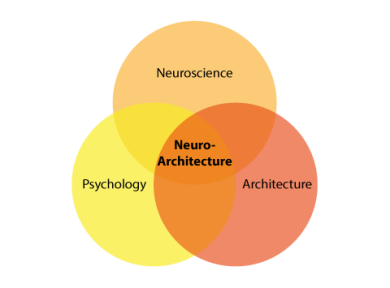
When we think about architecture, it is common to associate the quality of a space with its form, the materials used or its aesthetic appeal. However, the way we experience an environment depends on far more than what we see at first glance. This is precisely where neuroarchitecture comes into play, a discipline that seeks to understand how the built environment influences perception, behaviour, emotions and human well-being.
Bringing together architecture, neuroscience and environmental psychology, neuroarchitecture is based on a simple idea: spaces are never experienced in a neutral way. The brain constantly interprets the stimuli it receives from its surroundings and responds to them, often unconsciously. Spatial organisation, scale, materials, colours, acoustics and, in particular, lighting all influence the way we navigate, feel and interact with a space.
Light as the Starting Point of Spatial Experience
To speak about neuroarchitecture is to speak about the way space is experienced, understood and interpreted by those who inhabit it. It is not simply about designing environments that are functional or visually appealing, but about recognising that architecture influences perception and human experience in ways that are far deeper than they may initially appear. Within this process, light is not merely a detail. It is a fundamental condition.
It is through light that architecture becomes visible and understandable. Before we appreciate materials, textures, colours or proportions, there must first be the possibility of seeing and interpreting the space. Seeing is not simply about making objects visible; it is about allowing the brain to organise spatial information, establish visual hierarchies, recognise boundaries, identify circulation paths and construct meaning.
Lighting does far more than provide visibility. It establishes visual priorities. The brain does not observe every element with the same level of attention; instead, the distribution of light determines where our eyes are drawn first, which routes feel intuitive and which architectural features become the focal points of the space.
Far More Than Illumination
For this reason, light should be understood as a structural element of architectural design. It reveals or conceals, enhances or softens, guides or confuses. The very same space can be perceived in profoundly different ways depending on how it is illuminated. A surface may gain depth or lose its expression; a volume may appear monumental or discreet; a circulation path may feel intuitive or uncertain.
Lighting does not simply make a space visible. It actively participates in shaping its identity.
From the perspective of neuroarchitecture, this relationship becomes even more significant because the environment is never perceived objectively. The brain continuously interprets the sensory and emotional stimuli present within a space, with light being one of the most influential factors in this process. Lighting affects the way we perceive scale, depth, materiality and even the atmosphere of a place. Rather than simply illuminating architecture, light gives it legibility.
Neuroarchitecture and Architectural Lighting
For many years, lighting design was often associated primarily with meeting technical requirements such as illuminance levels, uniformity and energy efficiency. These parameters remain essential for ensuring visual comfort and proper performance. However, neuroarchitecture demonstrates that the quality of lighting cannot be measured by numbers alone.
The direction of light, its distribution, contrast, colour temperature, the modelling of surfaces and the way these elements respond to the intended use of a space all directly influence the user's experience.
A technically compliant lighting solution may still fail to provide comfort, support intuitive wayfinding or reinforce the architect's original design intent. Conversely, a carefully considered lighting scheme can strengthen the identity of a space, improve its readability and create a more intuitive and engaging experience.
Designing lighting is therefore about far more than selecting luminaires or calculating lux levels. It is about understanding how every lighting decision shapes the way people perceive and experience the built environment.
Experiencing Space Across Different Environments
The influence of lighting becomes evident in virtually every type of building.
In office environments, a well-balanced lighting scheme contributes to visual comfort, supports concentration and makes navigation throughout the workspace more intuitive.
In healthcare facilities, carefully designed lighting can create visually calmer environments, reduce the perception of discomfort and improve orientation for both patients and healthcare professionals.
In educational spaces, lighting quality influences the perception of the classroom, minimises glare and provides more suitable conditions for activities that require prolonged visual attention.
In hotels, restaurants and retail environments, light plays a decisive role in shaping the atmosphere, enhancing materials, defining areas for interaction and reinforcing the identity of the space itself.
Across all these examples, lighting moves beyond its functional role to become an integral part of the architectural experience.
The Responsibility of Designing with Light
Lighting design carries a clear responsibility. It is not enough to simply distribute light according to functional requirements or comply with minimum technical standards. It is equally important to understand how every design decision influences the way a space will be experienced.
Lighting that is excessively harsh can compromise the sensory quality of an environment. Insufficient lighting may hinder orientation and reduce the readability of a space. Poorly positioned luminaires can diminish the value of carefully selected materials or alter the perception of the architectural proportions originally intended by the designer.
Conversely, a well-conceived lighting design has the ability to strengthen the coherence of a project, highlight its architectural qualities and make the designer's vision perceptible to those who experience the space.
Architecture Only Exists When It Is Experienced
Perhaps this is where light truly establishes itself, within the context of neuroarchitecture, as far more than a technical resource. It is the medium through which architecture becomes visible, understandable and emotionally meaningful. Light allows form to be revealed, materials to express themselves and spaces to be interpreted with clarity and coherence.
To think about architecture through the lens of neuroarchitecture is to recognise that buildings are not designed merely to be seen, but to be lived. Human experience ultimately becomes the true measure of a space's quality.
And that experience begins, inevitably, with light.